Wild Child Embroidery Design Review
First Impression: Untamed, Uplifting, and Instantly Relatable
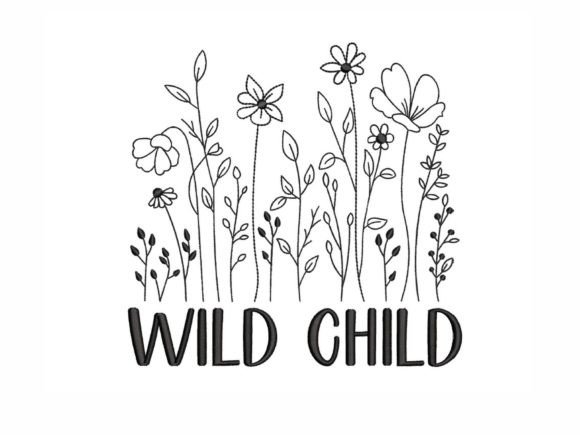
“Wild Child” lands with quiet confidence—not loud, not kitschy, but deeply resonant. It’s not farmhouse or minimalist; it’s inspirational with a soft edge—think wildflowers drawn with intention, lettering that breathes, and a mood that balances freedom with tenderness. For craft fair shoppers scanning a booth in under three seconds, Wild Child stands out because it feels personal, not generic. It avoids cliché while still speaking to universal longing: the desire to be seen as authentic, unpolished, and alive. That emotional hook is gold for handmade markets.
Where Wild Child Shines on Craft Fair Products
This design thrives where personality meets practicality. On a tote bag design, Wild Child works best centered low on the front panel—large enough to read from six feet away, yet delicate enough to avoid overwhelming the fabric. As an apron embroidery, it sings just above the pocket: grounded, wearable, and quietly empowering. For tea towel embroidery, place it vertically along one selvedge edge—wildflowers trailing down like a natural vine. That placement honors the Embroidery category’s emphasis on detail without sacrificing function.
As an embroidered patch, Wild Child gains versatility: sewn onto denim jackets, backpacks, or market bags, it becomes a badge of identity. On small items like fabric pouches or pillow covers, scale it down—but only to a point. The wildflower details and interwoven lettering demand clarity, so avoid shrinking below 3.5 inches wide unless you’ve tested stitch definition on your target fabric.
For caps? Proceed with caution. The curved surface and dense fill areas make clean execution tricky—especially with tiny stems or fine lettering. Reserve Wild Child for flat-front panels (like structured trucker caps), not full-coverage curved crowns. And skip dark fabrics unless you’re using high-contrast thread colors and extra stabilizer—those delicate wildflowers fade fast on navy or charcoal without careful planning.
Real-World Selling Strengths
- Booth magnetism: Wild Child draws in women aged 25–55 who respond to authenticity over irony—it’s not “funny” embroidery, it’s felt embroidery. That builds deeper engagement at craft fairs.
- Etsy seller advantage: Paired with strong printable mockups, Wild Child performs well in listings tagged “inspirational quote,” “botanical embroidery,” and “women-owned business gift.” Its emotional resonance boosts conversion more than purely decorative designs.
- Batch production friendliness: Though intricate, Wild Child isn’t overly dense—no excessive satin stitching or nested fills. That means consistent results across 20+ tote bags or aprons, assuming proper hoop size and stabilizer use.
- Brand consistency: Whether used on tea towels, patches, or pillow covers, Wild Child maintains tone and legibility. It supports cohesive booth displays without requiring multiple fonts or themes.
Careful-Use Notes Every Embroidery Designer Must Check
Don’t assume this design auto-translates across substrates. Here’s what demands attention before cutting thread:
- Stitch density: Those “delicate wildflowers” may pack tighter fills than expected. Test on scrap fabric—especially textured towels or thick canvas—to avoid puckering or thread breakage.
- Small lettering & fine lines: The “intertwined” aspect risks blurring at smaller sizes. Confirm readability on 4-inch pouches before committing to 50 units.
- Fabric texture matters: Loosely woven linen or terry cloth can swallow fine stems. Use cutaway stabilizer beneath—and consider slightly heavier thread (like 40-weight) for definition.
- Hoop size fit: Measure your largest hoop before digitizing or purchasing the digital embroidery file. Wild Child’s vertical flow may require a 5x7" minimum for full fidelity.
- Thread colors: The description mentions “delicate wildflowers”—but doesn’t specify palette. Choose botanical tones (sage, mauve, buttery yellow) over neon or monochrome for true Inspirational warmth.
Design Assets That Make or Break Your Craft Fair Launch
Before listing Wild Child as a handmade product or selling finished goods, do these five things:
- Test the machine embroidery design on *your* machine, *your* thread, and *your* most common fabric—not just the sample swatch included with the file.
- Check thread contrast on both light *and* dark fabric—what reads beautifully on ivory may vanish on black duck cloth.
- Review spacing between letters and flowers: tight kerning looks elegant on screen but can merge when stitched. Adjust if needed.
- Create at least one real-world mockup—a finished tote bag, not just a digital render. See how it hangs, folds, and catches light.
- Confirm commercial licensing status. If you’re selling embroidered craft fair products, not just the embroidery file, you need rights to produce and resell the finished product.
Final Thought: Wild Child Is More Than a Design—It’s a Conversation Starter
At its best, Wild Child doesn’t just decorate a tote bag—it invites a pause. A shopper stops, smiles, says, “That’s me,” and reaches for her wallet. That moment is why we show up at handmade markets: to offer meaning, not just merchandise. Wild Child delivers that weight without heaviness. It’s gentle rebellion stitched in silk and cotton. For Etsy sellers, small shop owners, and boutique makers building a loyal following, it’s not just another small shop product—it’s a quiet signature piece that elevates your entire line. Just remember: respect its delicacy in execution, honor its spirit in presentation, and let the wildflowers speak for themselves.