Flower in Pot: A Craft Fair-Ready Floral Embroidery Design
First Impression: Soft, Cheerful, and Instantly Recognizable
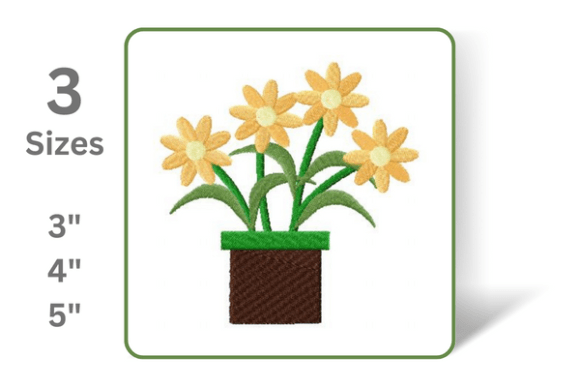
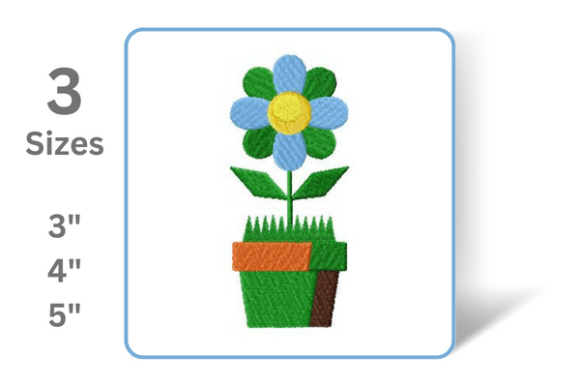
As an embroidery designer who’s prepped over 200 craft fair booths—from downtown pop-ups to rural farmers’ markets—I opened Flower in Pot expecting charm, not complexity. And it delivers: this is a soft, cheerful, gently decorative machine embroidery design with clear floral appeal and no visual clutter. It doesn’t shout “modern minimalist” or “vintage botanical”—it lands somewhere warm and approachable: think cottagecore meets small-shop sophistication. That balance is gold at handmade markets, where shoppers pause for pieces that feel personal, not mass-produced.
Where Flower in Pot Shines on Craft Fair Products
This design thrives where personality meets practicality. On a natural linen tote bag? Perfect—centered just below the handle seam, it reads clearly from three feet away and invites touch. On a cotton apron? Ideal above the pocket or along the bib edge—it adds handmade warmth without overwhelming function. For tea towel embroidery, Flower in Pot works beautifully when placed near the top hem or corner; its balanced shape avoids visual heaviness on textured terry cloth.
It also translates exceptionally well to smaller items: embroidered patches (great for pinning or iron-on gifting), fabric pouches (especially in earthy or muted tones), and pillow covers (where it anchors the front without competing with patterned backs). As a cap embroidery? Use caution—stick to structured, medium-crown caps with smooth crowns, and avoid placing it too low where curvature distorts petal clarity. On market bags and handmade gifts, Flower in Pot consistently reads as premium, not generic—its gentle curves and organic flow signal intentional design, not clipart.
What Makes It Sell on the Floor—and Online
At a craft fair, attention spans are short and booth traffic is fast. Flower in Pot wins because it’s instantly legible at glance size (3–4 inches wide), holds up in natural light, and photographs cleanly for Etsy listings and printable mockups. Unlike dense, high-detail florals, it avoids stitch density pitfalls—no tiny stamens or micro-leaves that vanish on dark fabric or blur in phone photos. Its open composition means thread colors stay vibrant, even with budget-friendly 40-weight polyester, and it scales gracefully from 2.5" (for patches) to 6" (for pillow covers) without losing definition.
For Etsy sellers and digital embroidery file shops, Flower in Pot is repeatable inventory—batch-stitching 30 tea towels or 50 tote bags feels efficient, not exhausting. There’s no tricky underlay or excessive trims to slow down production. And because it’s inherently versatile, it supports brand consistency across product lines: same design, different context, unified handmade quality.
Careful-Use Notes Every Embroiderer Should Know
- Dense areas: While not overly dense, check the center of the flower—if petals converge tightly, test stitch density on your target fabric. Over-stabilizing can cause puckering on lightweight cottons.
- Tiny details: None present—this isn’t a hyper-realistic rose. But if your version includes fine stem lines or subtle leaf veins, confirm they’re legible at 2.75" width on textured towels or thick canvas.
- Dark fabric: Works well—but verify thread contrast. Light yellow or cream petals may fade on navy or charcoal unless you use bright white or ecru top thread and a matching bobbin.
- Curved surfaces: Avoid placing Flower in Pot too close to seams or brims on caps or pouches. The outer petals may distort slightly on highly curved areas.
- Small sizes: Below 2" wide, some petal separation may soften. Stick to ≥2.25" for patches and pouches to preserve clarity.
Design Strengths for Booth Impact and Buyer Engagement
In person, Flower in Pot strengthens your booth display by adding visual rhythm without chaos. Group three sizes—small on a patch, medium on a tea towel, large on a pillow—and customers subconsciously register cohesion. It also sparks conversation: “Is that hand-drawn?” “Do you make the fabric too?” That engagement turns browsers into buyers.
It elevates perceived value—handmade products with thoughtful embroidery read as more intentional, more curated. And because it’s floral but not fussy, it appeals across age groups and aesthetics: teens love it on pouches, grandparents on pillow covers, new homeowners on kitchen linens. That broad resonance makes it a reliable anchor for any small shop product lineup.
Practical Designer Notes Before You Stitch
Before cutting fabric or loading hoops, do these six things:
- Test Flower in Pot on scrap fabric matching your final product—especially if using textured towels, thick denim, or stretchy knits.
- Check thread contrast across at least three fabric colors: light, medium, and dark. Adjust thread colors accordingly—not every version of this design ships with optimized palettes.
- Review spacing between elements. If stems or leaves float too close to edges, trimming may cut stitches. Leave ≥⅛" margin.
- Confirm hoop size compatibility. Some versions fit 4×4 hoops; others require 5×7. Don’t assume—measure or consult the file metadata.
- Match stabilizer to fabric: tear-away for stable wovens, cut-away for knits or towels, and lightweight fusible for delicate linens.
- Create one real mockup—not just a digital preview. Drape that embroidered tea towel over a ceramic mug. Pin that patch to a denim jacket. See how light hits the stitches. Then photograph it in natural window light.
And one final note: always verify commercial licensing before selling finished products. This wonderful design can be beautifully embroidered on any fabric you like to work with—but only if your license permits resale of the embroidered item. When in doubt, contact the designer or marketplace directly. Protect your small business, your reputation, and your craft fair ROI.
Final Thought: A Quiet Standout
Flower in Pot won’t dominate your booth with flash—but it will earn trust, invite touch, and sell steadily all day long. It’s the kind of floral embroidery design that feels like a quiet promise: handmade, considered, and made for real life. Whether you’re an Etsy seller building seasonal collections, a boutique maker curating giftable home goods, or a Cricut + embroidery hybrid crafter expanding into stitched products—this is one floral machine embroidery design worth stitching, displaying, and repeating.