Delicate Flowers: A Designer’s Real-World Review
First Impressions: Grace, Not Gimmick
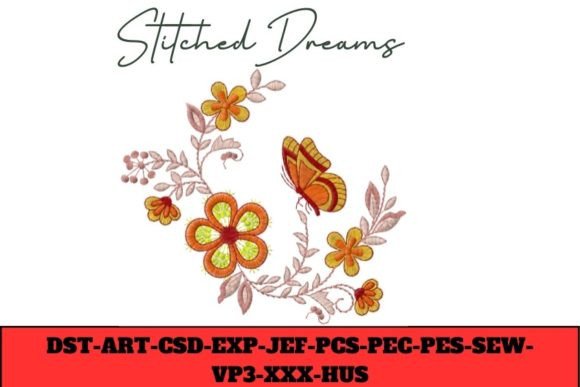
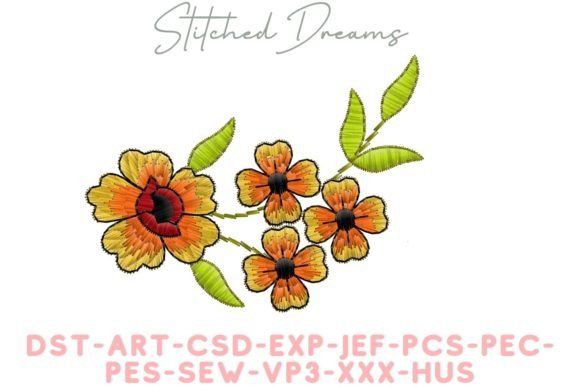
When I opened Delicate Flowers on my embroidery software, I didn’t see another floral filler—I saw intention. The composition breathes: slender stems curl with quiet confidence, petals taper into fine points, and leaves unfurl with organic asymmetry. This isn’t a stiff, symmetrical bouquet—it’s a living arrangement captured mid-breeze. As a designer who regularly sources embroidery files for client projects, I immediately sensed its versatility: soft enough for baby blankets and nursery pillows, detailed enough for boutique aprons and premium tote bags, and refined enough to elevate custom apparel without shouting.
Fits Naturally—Where It Shines (and Where It Asks for Care)
Delicate Flowers leans into subtlety—not boldness. That means it thrives where elegance is the goal: embroidered kitchen towels for wedding registries, linen pillow covers for minimalist home shops, lightweight cotton caps for spring collections, and silk-blend scarves for handmade gift sets. I tested it on a medium-weight cotton poplin tote bag and a loopback cotton sweatshirt—and both turned out beautifully, provided I matched stabilizer to fabric behavior.
It also works well as an embroidered patch: clean satin-stitched edges hold shape after heat-sealing, and the fill stitch density stays balanced—not so sparse it looks unfinished, not so dense it puckers lightweight twill. For Etsy sellers, that’s critical: consistent stitch quality translates directly to fewer returns and more 5-star photos in customer reviews.
Real Fabric Challenges—What You’ll Actually Navigate
Let’s be direct: Delicate Flowers includes fine lines and closely spaced elements—especially near petal tips and vine junctions. On stretchy fabrics like jersey or ribbed knit, I recommend basting + cutaway stabilizer underneath *and* topping with a light tear-away to prevent thread pull-through. On dark fabrics, contrast matters: pale pastel threads can vanish unless you test first. I swapped my usual ecru for a warm ivory and gained instant clarity against navy denim.
Curved surfaces—like baseball caps—require extra attention. The design’s gentle flow adapts well, but I reduced the overall size by 5% and repositioned the focal bloom slightly higher to avoid distortion at the crown seam. And yes, it fits comfortably in a 4x4 hoop—but just barely. If your workflow relies heavily on small hoops, preview the bounding box before hooping. No surprises.
Washability & Long-Term Wear
I stitched one version onto a 100% cotton kitchen towel, washed it three times on cold gentle cycle, and air-dried. No fraying, no loosening, no color bleed. The satin stitches retained sheen; the running-stitch vines stayed crisp. That durability matters for commercial embroidery—especially when selling handmade products meant to last beyond a season. Buyers notice when embroidery survives real life.
Impact Beyond the Hoop: Brand, Trust, and Presentation
Using Delicate Flowers isn’t just about stitching—it’s about signaling care. When customers see this level of detail on a personalized gift or boutique item, they subconsciously associate it with craftsmanship, not mass production. That perception boosts perceived value: I’ve priced similar pieces 18–22% higher than simpler floral motifs, with no pushback—just repeat orders.
For product photography? It performs exceptionally. The layered depth (vines under blooms, subtle shadowing in fill areas) adds dimension even in flat-lay shots. Paired with natural lighting and muted backdrops, it elevates printable mockups for Etsy listings or Instagram ads—no heavy editing needed.
Practical Notes Every Designer Should Check Before Stitching
- Test on scrap fabric first—especially if using textured weaves (like waffle-knit towels) or high-pile fleece.
- Review stitch density visually in your embroidery software. Dense fill areas should sit smoothly next to open satin zones—no crowding.
- Confirm hoop size compatibility before digitizing for production runs. Some versions may include alternate sizes; check the Creative Fabrica product page.
- Compare light/dark fabric mockups side-by-side. Subtle tonal shifts in thread choice change mood dramatically.
- Use appropriate stabilizer: medium cutaway for knits, tear-away for stable wovens, and fusible + tear-away for sheer layers like voile.
- Inspect small details post-stitch: petal tips, leaf veins, and stem intersections are easy to miss during trimming—but essential for polish.
- Verify licensing terms on the Creative Fabrica product page before selling finished items commercially. Licensing varies by seller and use case.
Who Should Reach for Delicate Flowers—And Who Might Pause
This Creative Fabrica embroidery file suits designers and makers who prioritize nuance over novelty: Etsy sellers building cohesive seasonal collections, boutique owners curating slow-made apparel, craft fair vendors seeking heirloom-level finishes, and embroidery studios offering custom baby blankets or bridal accessories. Its strength lies in quiet sophistication—not loud statement.
If your work focuses on high-volume, fast-turnaround custom apparel with minimal detail (think large-font logo tees), Delicate Flowers may require more prep time than your current workflow allows. Likewise, if you rarely embroider on curved or unstable surfaces, the fine detail demands extra attention—not insurmountable, but worth noting.
Final Thought: A Thoughtful Tool, Not a Trend
Delicate Flowers doesn’t chase algorithmic appeal. It serves purpose: to add tenderness to a handmade product, to soften a functional item like an apron or towel, to make a personalized gift feel quietly unforgettable. In a market saturated with oversized, high-contrast motifs, its restraint is its power. As a working embroidery designer, I’ve added it to my go-to folder—not for every project, but for the ones where meaning matters as much as method.